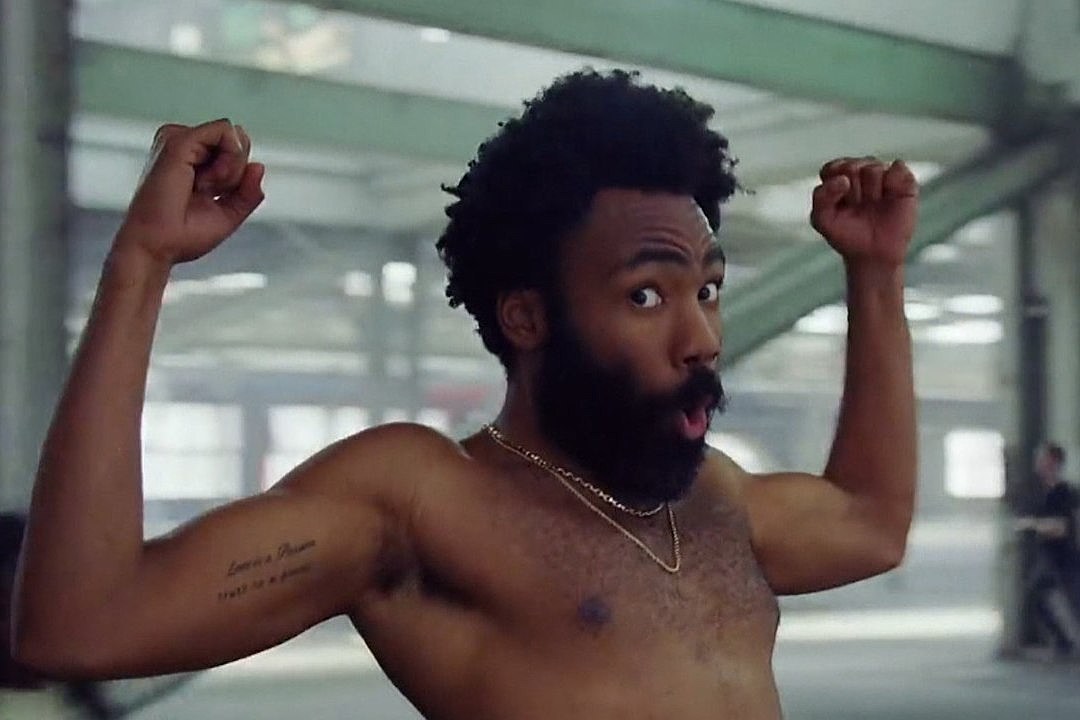
Donald Glover might as well be the poster child of the perfect rebrand.
The actor, singer, and showrunner went from being the kinda quirky, “not-like-the-other-Blacks” Black nerd to a bona fide “For Us By Us” Black artist within the span of a social media clear-out and the release of his hit show Atlanta. Now with the release of his music video “This is America,” the artist seems to be trying to solidify his new face by taking American culture to task through hip-hop.
“This is America” is visually compelling. Every re-watch reveals something new. Gambino creates an onslaught of chaos that he neatly layers within each frame of the video which replicates the chaos of American culture. But the way the video carefully compartmentalizes all that’s going on also acts as a cover up for the overall toothlessness in Gambino’s take at the current state of American culture.
Like Salt-bae seasoning up a steak, Gambino’s sprinkled in enough callbacks and cameos within the video that it instantly gives it the air of being significant in someway. Whether it was on how his dance mirrored Jim-Crow era imagery or how SZA’s end appearance might have been representing the statue of liberty, so many people and so many publications spent so much time trying to decipher all the allusions that it gave the video more depth than what it really delivers.
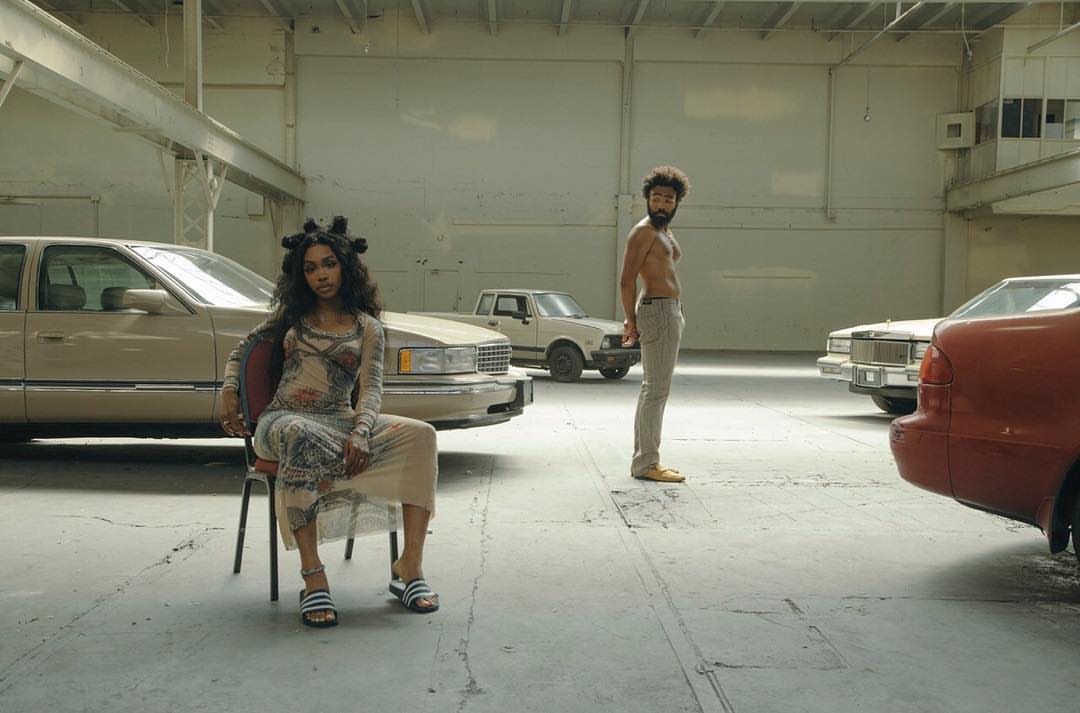
Even after watching it multiple times, there’s still a level of ambiguity that keeps his overall message relatively unclear. In rooting his references in bits of Black history, Gambino also seems to shroud-out any suspicion of what his true intentions were with making this video. To me, it doesn’t go beyond being his own stab at being “woke” within his art without actually knowing what he wants to say. Seeing as up to the point of the video’s release, he’s voiced his disinterest in delving into the political– he called “hashtag activism” a waste of time on twitter–the video’s extensive ambiguity has you wondering whether he actually had something to say or if he just wanted to cash in on people’s returning need for their pop culture to be political.
What he does seem to say, doesn’t really add up.
Gambino clearly tries to talk about the state of gun violence in America. In the video’s opening scene, viewers are first lulled into a false sense of safety and innocent anticipation by spiritual sounding background vocals while a single man strums against his guitar. Then Gambino shows up with a gun and shoots straight into the back the man’s head. The man’s body drops and he’s quickly dragged away from the screen while our attention is dragged away from that scene by the camera and forced to follow a dancing Gambino.
The abruptness of the action happening as well as how fast viewers are meant to move on from it with Gambino ushering us on saying “This is America” really reflects the cycle American society finds itself stuck in when it comes to gun violence: shock then silence on the subject as we’re all expected to move on. This echoes even more later on in the video when a Black choir gets shot up by Gambino himself, this time with a callback to the Charleston shootings.
But while Gambino is good at capturing the cycle of gun violence American culture is caught up in, his take on it feels somewhat weak.
Nowhere within the video do we see white people appear. Instead, Gambino physically plays out America’s ills against other Black people. This neatly skips past the fact that white men make up much of the gun violence that keeps occurring across the country, letting Gambino skirt past confronting whiteness at all. Maybe because it meant holding up a mirror to much of his fan base which would’ve created more controversy.
The scenes where he dances with school children in the foreground that end up distracting you from particularly intense moments of chaos seem to be his way of saying that social media and the latest dance crazes is keeping the younger generation from catching on to what’s happening in the real world. But this completely ignores the reality that much of the pushback made against the problems Gambino tries to present came from young people.
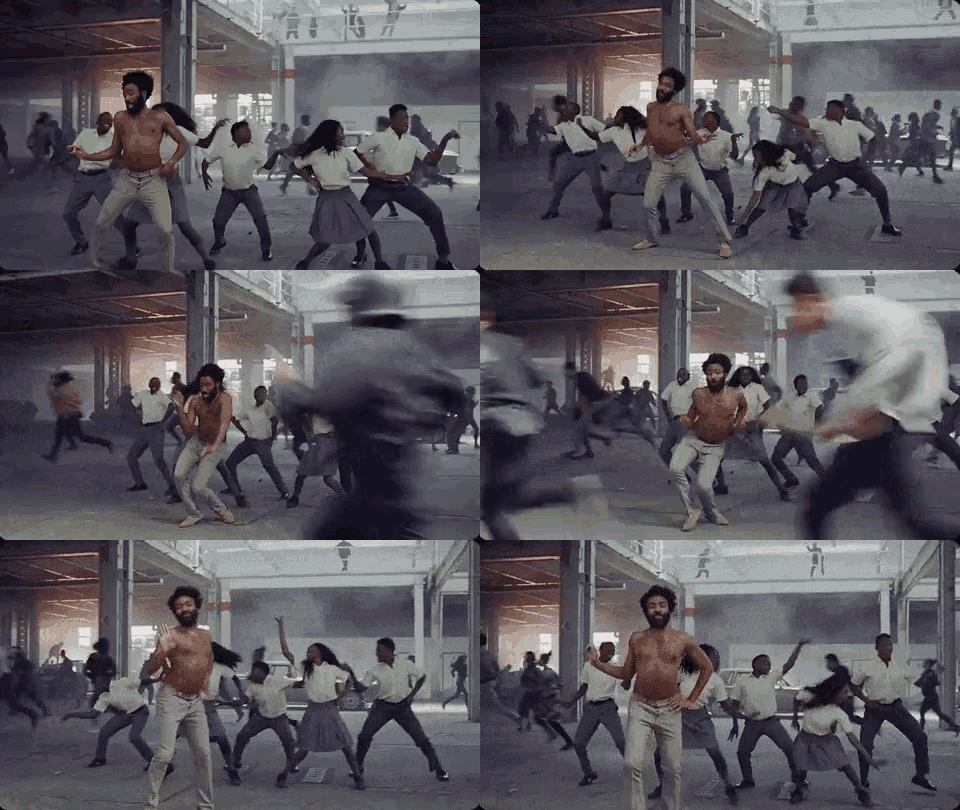
Much of the #BlackLivesMatter protests that took place all over the country were spearheaded by high school students. #MarchforOurLives wouldn’t have happened had it not been for the efforts of the student survivors from the Parkland Shooting.
The video’s gratuitous use of violence against Black people within the video also has me asking who exactly it’s for.
Black people don’t need a reminder of what’s going on in our society because social media keeps showing it to us through videos circulating our twitter and facebook feeds on autoplay. Not to mention, we’re already forced to face those encounters in our day to day lives. Why re-traumatize the ones you’re meant to represent?
If the video’s violence was meant to wake up white people to the realities of Black oppression, Gambino definitely overestimated how much he could do.
Videos of police brutality go live and white news media immediately find ways to victim blame. Additionally, the idea that seeing Black death would sway white people flies in the face of much of history. White people made postcards of lynchings and sent it to each other. White people treated lynchings like public picnics and parties. If you were on twitter around the time the video first dropped, you’d have seen this all happen in real time when people quickly turned the scenes specifically meant to be metaphors for Black death into memes within a matter of minutes.
While “This is America’s” music video does manage to capture aspects of American culture, Childish Gambino’s heavy-handed attempt at making his pop culture political feels way more traumatic than it is telling.
Featured Image via Youtube
 Glamdom