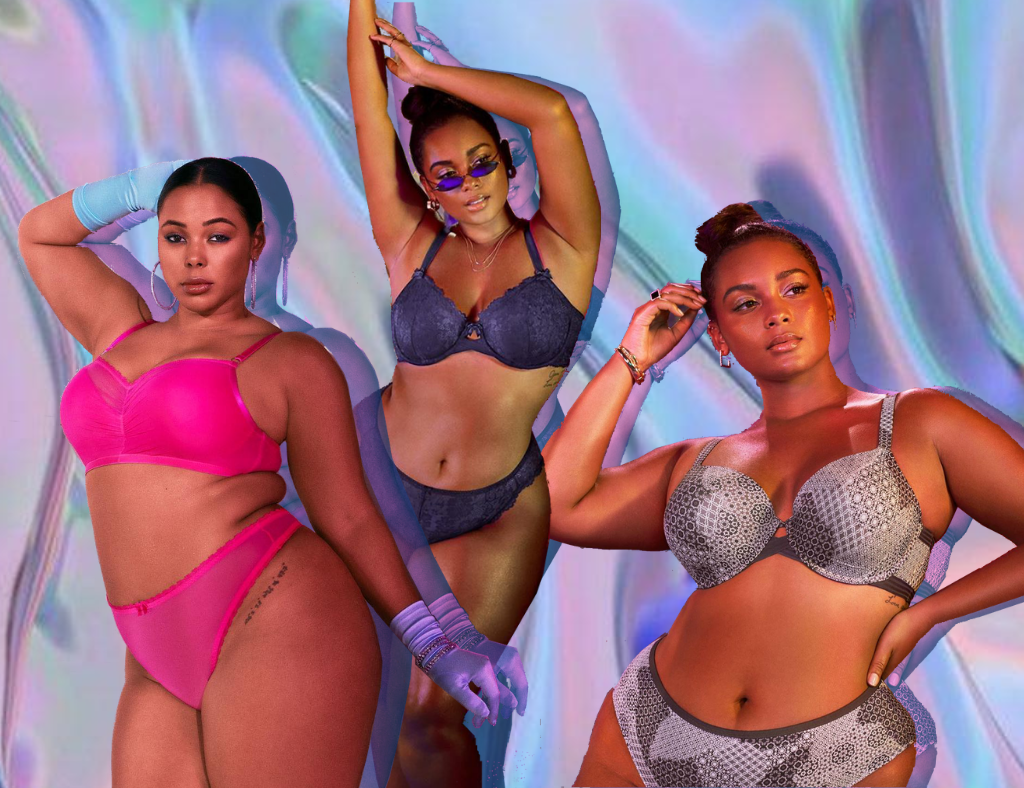
For years now, Rihanna has established herself as a sex and fashion icon. From songs like “S&M” to her 2014 CFDA Swarovski dress, she’s always brought a high level of sex appeal, creativity, and individuality to both the music and fashion world. So it wasn’t surprising that the internet went wild when Rihanna announced the launch of her lingerie brand Savage X Fenty back in April of last year. Who wouldn’t want lingerie designed by Rih?
Mystery around the brand quickly grew as people wondered what the line would look like and how soon it would be available. Meanwhile, those of us who wear plus-sizes wondered if the brand would be as inclusive as Rihanna’s beauty brand, Fenty Beauty.
Back when Fenty Beauty was first released, Rihanna had the makeup community and industry shook. Her debut beauty campaign featured models who normally wouldn’t be at the forefront of beauty campaigns like dark-skinned model Duckie Thot, plus-size model Paloma Elsesser, and Muslim model Halima Aden. Debuting with a range of 40 shades, Fenty made sure that every skin tone had a color even making sure darker shades had as many colors as the lighter shades.
Fenty Beauty proved itself as a makeup brand built for all, and so far they’ve lived up to this. And with their extension of their foundation shades to 50 made to coincide with their Pro Fil’tr concealers, you can tell that Fenty Beauty’s constantly pushing themselves to be even more inclusive, setting the standard for other companies to do the same. Many other brands have followed Rihanna’s lead by releasing collections with wide ranges that actually cater to dark skinned people, no longer making them an afterthought. Plus-sized people hoped that Savage X Fenty would have the same impact on the lingerie industry.
In an interview with E! News, Rihanna said she wanted women who wear Savage X Fenty to feel “sexy, confident, and comfortable” and that it’s “hard to put all those things into one.” That experience is something people look to lingerie for, and that was what she seemed to have achieved when she debuted her line. But then those of us in the plus-size community were a little disappointed by the size range. While we were excited that there were plus-sizes, the ones available at the time only went up to a 3x and a size 44DDD. This meant that a lot of fat people wouldn’t be able to wear the line.
But then came the fashion show, and after seeing the plus-size models, we thought the brand planned on offering more sizes.
Most of us are used to lingerie shows looking like Victoria’s Secret’s filled with white, thin, able-bodied, cis women walking down long lit up runways. That’s been the standard for lingerie and the fantasy of sexy most brands have been selling us. So when Savage X Fenty had its first fashion show, I was surprised. The garden-like setting was filled with models of all races and sizes including two very pregnant women, one of whom was Slick Woods who went into labor right after the show ended.
Two models in particular really stood out to me: two plus-size models who were both dark-skinned and visibly fat without an hourglass figure. This is so rare to see in the plus-size industry, let alone the lingerie industry: two fat Black women in a fashion show during NY fashion week wearing bright lingerie and being unapologetically sexy, beautiful, Black, and fat.
It was refreshing to watch models and mothers flaunt their bellies, sexualites, and power. The models and the show felt relatable. They looked like Fenty’s customers. It didn’t feel like Fenty was trying to sell us a fantasy of what we “should” look like or what we should “want” to look like in their lingerie. It felt like the brand was simply celebrating who we are. This was the show that made brands like Victoria’s Secret take note, and it was the show that branded Savage X Fenty as inclusive.
Savage X Fenty’s first runway show made many of us believe that maybe the brand did plan on extending sizes, that maybe Fenty hadn’t really forgotten about us, maybe soon more fat people could look and feel like the plus-size models in the show.
Despite major steps the brand makes to be inclusive, it somehow misses the mark.
When Savage X Fenty released their first Valentine’s Day line, the collection was initially well received. Then plus-size fashion blogger Alysse Dalessandro pointed out the stark difference between the plus size and the straight size version of the “Hearts” bralette.
The straight size (S-XL) version of the bra was pink and strappy with a cute cut-out design while the plus-size (1X-3X) version was just a mesh bra with patchwork hearts. Soon after others on the Internet also pointed out how the two bras were modeled differently on the brand’s site. The plus-size model was posed with her arms wrapped around her stomach almost as if she was trying to cover it up and hide her body while the straight size model was positioned with her arms up and hands in her hair.

This rubbed many fat women the wrong way. Looking at the pictures of the two models side by side from the poses to the actual products, one body was being covered up while the other was being shown off. These images didn’t send a good message to and about fat people. They sent the message that fat bodies should be hidden while thin bodies should be flaunted.
But when fat women tried bringing up our disappointment with the design on Twitter, we were immediately met with an overwhelming amount of push back from skinny people. Even Alysse was harassed for her post despite the fact that Savage X Fenty later on reached out and thanked her for her feedback.
On Twitter, I pointed out how other lingerie companies like Playful Promises and Torrid had already designed different variations of the strappy bra. My mentions were flooded with thin people telling me why Savage X Fenty couldn’t have made the bra in a bigger size. One of the main excuses I kept receiving was because of construction. Skinny people were convinced that a plus-size version of the hearts bra couldn’t have been made in a way that would support fat bodies.
A lot of the responses clearly came from fatphobia. Skinny people seemed to think that the lack of sexy plus-size options was a reasonable consequence for being fat rather than negligence on Savage X Fenty’s part. To them our bodies were unimportant, so Rihanna was doing us a favor by even considering us a part of her brand. By critiquing the line, we were being ungrateful.
Even after I pointed out how a plus-size version of the bra could have been made, I still had skinny people trying to explain why it wasn’t possible for fat women to have better style options.
Rather than actually listening to what fat women were saying, many saw us voicing our disappointment and frustration as attacks against Rihanna. With Rihanna as the face of all her brands, critiques about them can sometimes feel like personal attacks against her, and there have been times that Rihanna’s lines have been unfairly criticized. This wasn’t one of those times, though. Nobody was attacking Rihanna. Fat people were critiquing the line from a place of love for her and her work. We all love her so much that we were vocalizing how we wanted to be included in her line.
Fat people are all too aware that bras can’t be constructed the same. We weren’t asking for the same exact bra. We were just asking for a strappy bra in our size. Not only was that not asking for too much, this is simply asking for the same things thinner people have. So yeah, maybe that meant widening the straps, changing the cups, making the band different, but fat customers matter enough to make the extra effort to have pieces for us. Even if making the bra would have required more money, more fabric, or more support; plus-size people already pay more for styles from Savage x Fenty than straight size people. And seeing as the brand later made a plus-size edition of the strappy bra for their second Valentine’s Day collection, construction wasn’t much of an issue after all.
Dalessandro’s tweet sparked a conversation about not only these two bras but also about plus-size fashion in general. The plus-size fashion industry has come a long way in the last few years, giving fat women more options than we’ve ever had before. But even within those options, our choices are still very limited compared to what straight size women get to wear.
There always seems to be an overwhelming sense of modesty within the styles set aside for plus-size women as if brands are trying to hide our fatness.
Sure, not everyone would want something so sexy. But for those who do, there should always be an option. Some of us want clothing pieces that are sexy, revealing, and risqué. What is so wrong with fat people wanting the same clothing as our thinner counterparts?
By choosing to not give us these options, brands send the message that thinner people are meant to show their bodies, be sexy, and have fun with fashion while fat people should use fashion to hide our bodies as much as possible. Fat women deserve to have the same options as skinny women, and we should be able to ask for these options without being spoken over or silenced.
 Glamdom